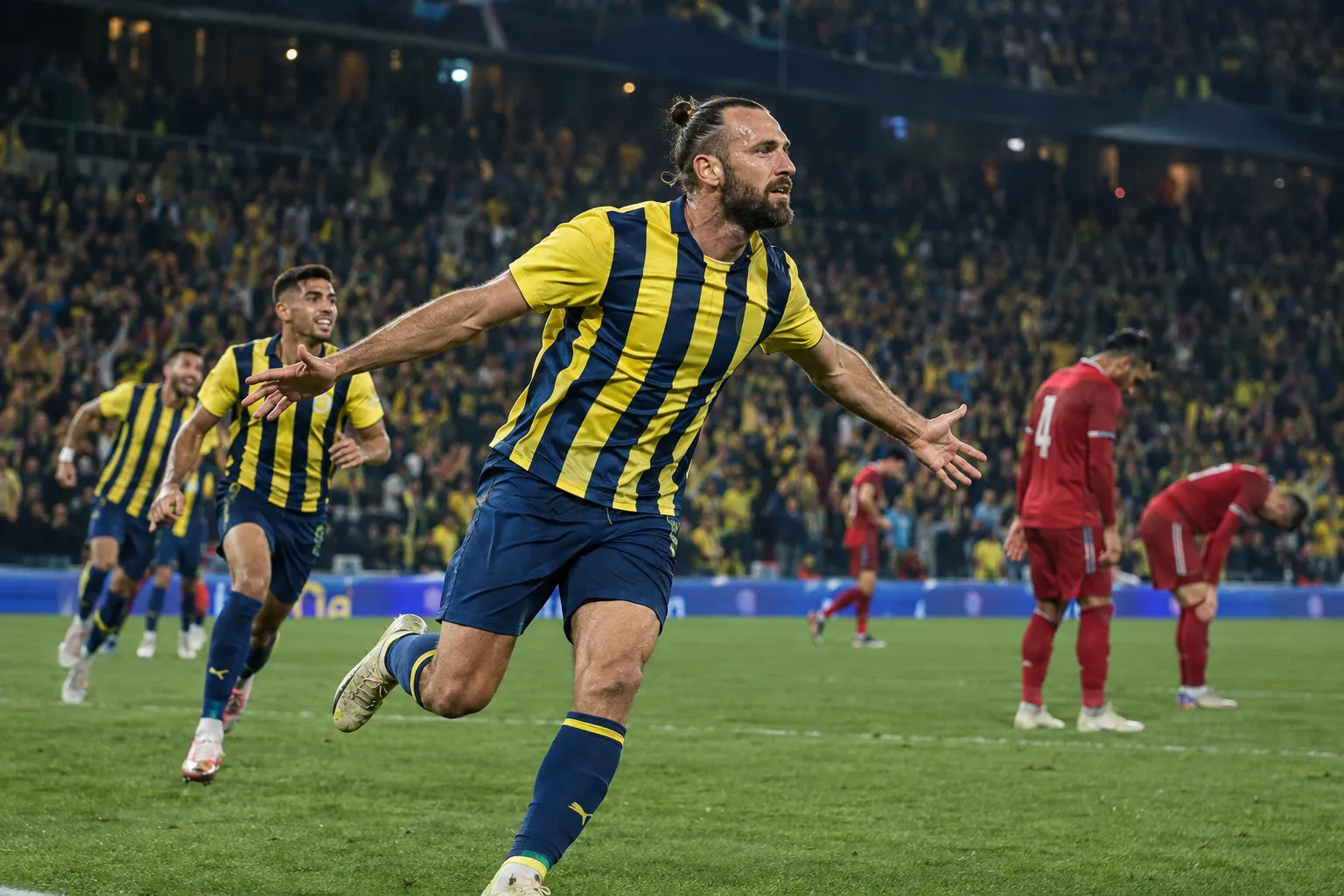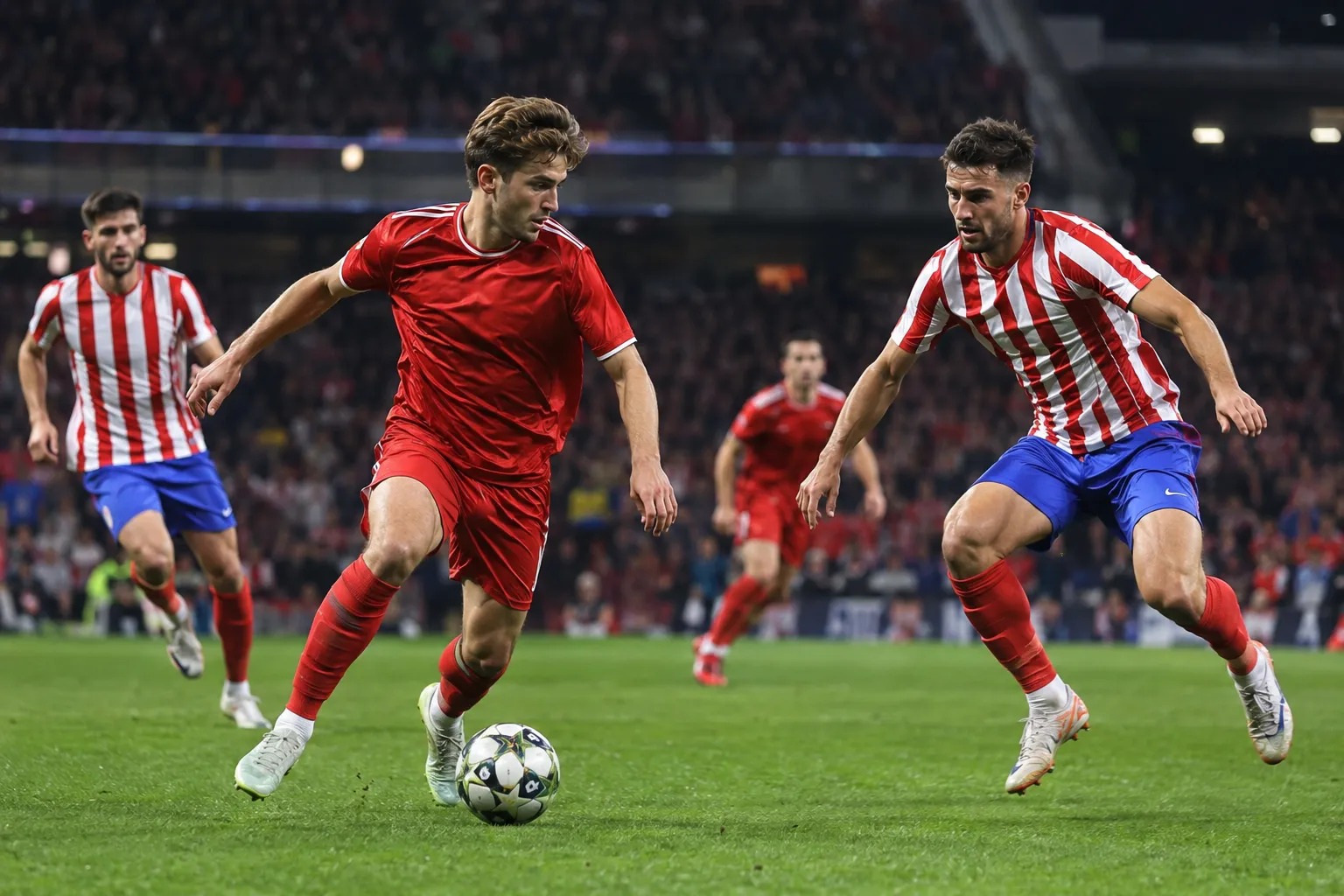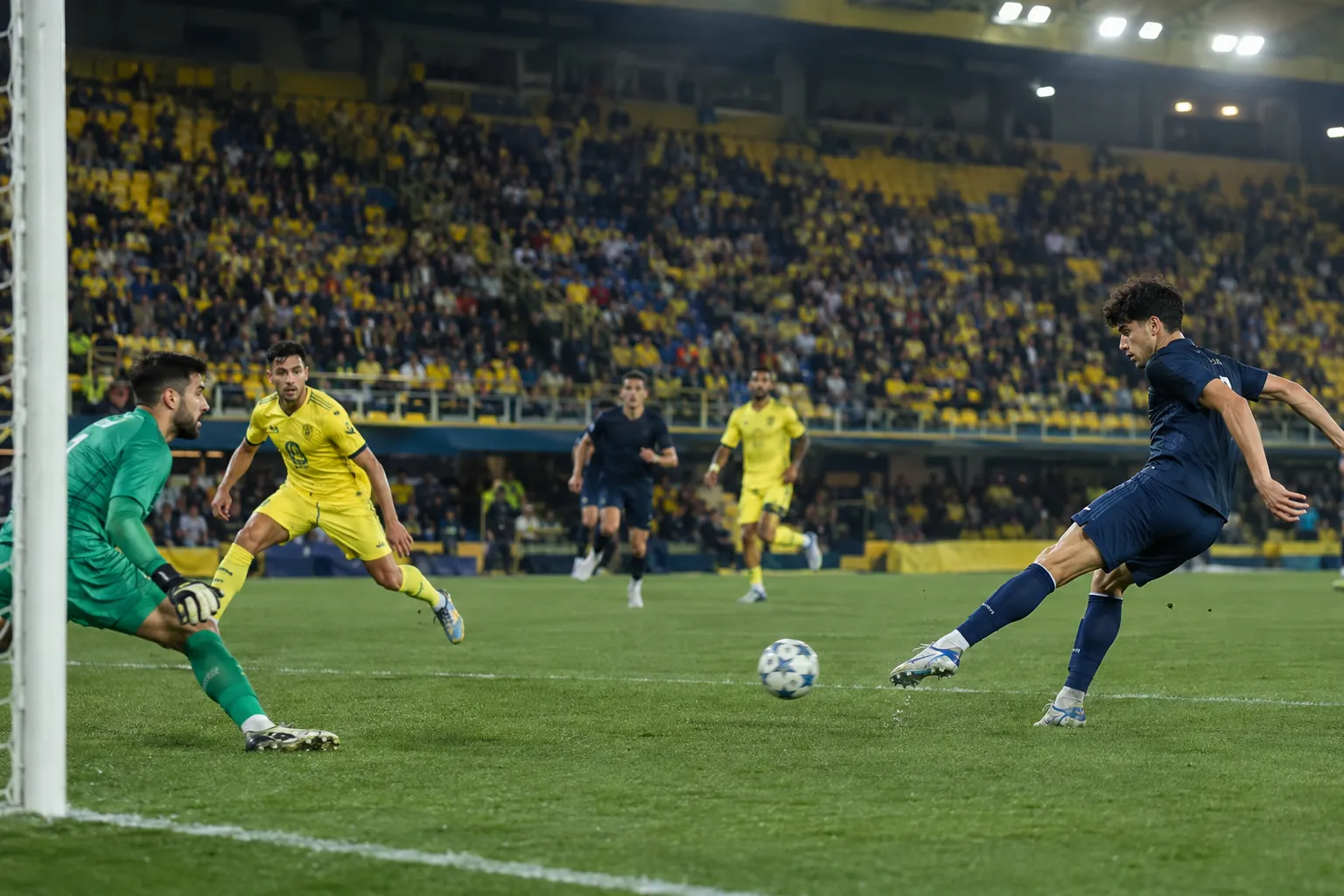
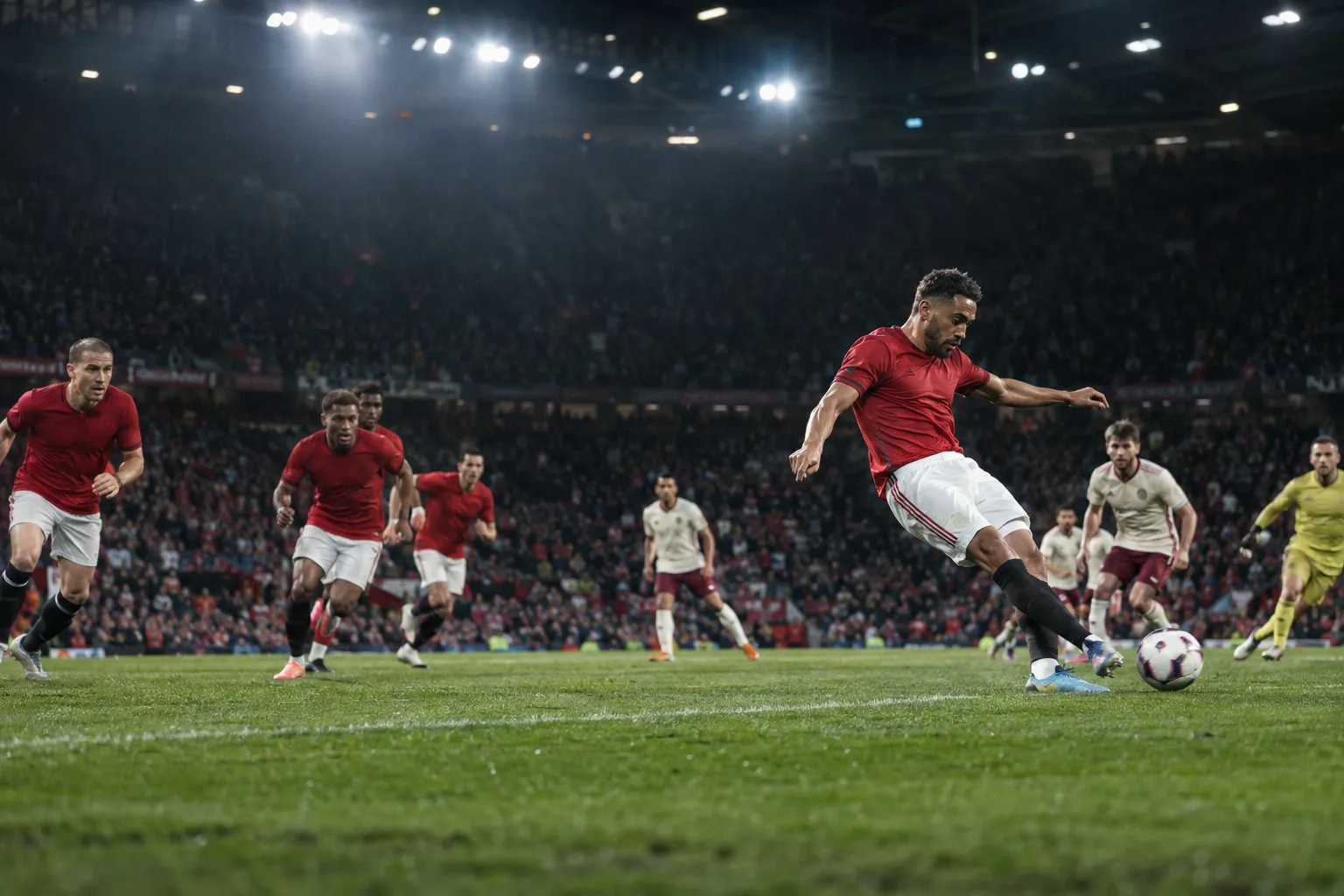
Manchester United turned around a match that seemed to be slipping away from them: outplayed and 2-0 down to Roma at half-time, the English club won 3-2 at Old Trafford on Tuesday 3 November, on matchday four of the Champions League. Bruno Fernandes pulled one back from the penalty spot before Matheus Cunha scored twice late on. Sent off after his second goal, the Brazilian summed up a contradictory evening: a valuable win, but one secured after a worrying first half and finished amid tension. UEFA’s match report confirms the score and the key incidents; the Manchester club and the British press provide more detail on how the match unfolded. Manchester United and Sky Sports highlight in particular the shift in the second half.
A fast start exposed Manchester United’s weaknesses
Roma took the lead in the 11th minute through Matías Soulé, then Donyell Malen converted a penalty six minutes later. The two goals punished a United side that left space down its left flank and lost possession in midfield. Full-back Diogo Dalot, who had pushed high up the pitch, acknowledged on 4 November that this was part of Michael Carrick’s plan, but said it left the team vulnerable to losing the ball centrally. His analysis, published by The Guardian, helps explain why Roma’s lead was not simply the result of a stroke of luck.
The significance of that opening spell went beyond the scoreline. United came into the match under pressure after a run without a win, while their manager Michael Carrick was at the centre of speculation. The team were booed at half-time, according to The Guardian’s report, after a first half in which Roma could have extended their lead further. A spectacular comeback should not, therefore, obscure the initial problem: the chosen set-up exposed the defenders, and emotional control appeared fragile.
The penalty brings United back into the match and shifts the pressure
After the break, United raised the tempo and pushed higher up the pitch. Cunha won a penalty after contact with Gianluca Mancini. Devis Vásquez, making his debut in goal for Roma, saved Fernandes’ first attempt, but the kick had to be retaken: UEFA’s technical explanations of VAR decisions state that a Roma player had entered the area before the shot and played the ball. Fernandes scored from his second attempt in the 58th minute.
That goal changed the momentum more than the scoreline alone suggests. Manchester United stepped up the pace, won more duels and forced Roma to defend close to their own box. Bryan Mbeumo’s shot hit both posts without going in, a sign that the pressure was finally producing chances, but also that the margin remained narrow. It would be reductive to attribute the win to the penalty alone: United’s renewed initiative played its part, as did Roma’s difficulty retaining the ball under pressure.
Cunha finishes the job, then leaves United with ten men
In the 83rd minute, a missed intervention by Leonardo Balerdi allowed Cunha to equalise from close range. Three minutes later, the forward scored the winner from a pass by Shea Lacey, who had come on as a substitute. LaLiga’s official match record, which lists the events of the match, confirms Cunha’s brace and his dismissal for a second caution in added time.
The Brazilian was shown a first yellow card for celebrating the decisive goal; a late foul then earned him a second. United therefore held on for the win in the closing minutes with ten men, but Cunha will be suspended for the club’s next European match. The exact date of that fixture and the consequences for the standings are not needed to gauge the immediate impact: his absence will deprive Carrick of a forward who has just decided the match, while the sending-off is a reminder of the cost of letting euphoria get the better of you.
Roma’s response underlines the problem of managing a lead
The defeat is also a warning for Gian Piero Gasperini’s side. On 4 November, the coach told Roma’s official media that his team had lacked the energy to keep pressing United’s forwards after the penalty. He also referred to goals conceded in unfavourable circumstances and felt his team could have made greater use of long balls to escape the pressure. His comments are available in the interview report published by AS Roma.
This explanation, attributed to the coach, should be distinguished from an independent assessment of the performance: Roma did lead by two goals, but failed to stem their opponents’ momentum after the deficit was reduced. The management of a European lead has been discussed around the club before this season, but the Manchester match is not enough to establish a definitive pattern. It does, however, reveal a concrete area for improvement: how to retain a way out from the back and an attacking presence when the opposition increases the intensity of its press.
A respite for Carrick, not an answer to every question
The result ends a run of nine matches without a win, according to Opta Analyst, and gives Carrick a major victory in a difficult context. It does not, however, confirm that his position is secure or that a lasting recovery is under way. In its analysis published on 3 November, The Guardian notes that the club’s problems go beyond a manager’s tactical choices and that the second-half performance must be repeated consistently to change perceptions of the team. Its analysis also stresses the role of young players, particularly Lacey and Kobbie Mainoo, in the renewed energy.
The useful conclusion, then, is a measured one: United got the points and the confidence boost they needed, but this scenario is not a template to repeat. A team cannot count on a retaken penalty, two opposition shots hitting the posts and a dramatic finish every week. Sunday’s league meeting with Aston Villa will provide an early indication of whether United can turn this response into consistency. For Roma, the pressing need is the opposite: to find a way to protect their leads when a match turns under pressure.
Go to the source.
The references below document the research and let readers consult the original publications. Their number alone does not certify every statement in this article.
- asroma.comAS Roma ↗Reference consulted · accessed on 04/11/2026
- laliga.comLaLiga consacrée au match ↗Reference consulted · accessed on 04/11/2026
- manutd.comManchester United ↗Reference consulted · accessed on 04/11/2026
- Sky SportsSky Sports ↗Reference consulted · accessed on 04/11/2026
- The GuardianThe Guardian ↗Reference consulted · accessed on 04/11/2026
- The GuardianSon analyse ↗Reference consulted · accessed on 04/11/2026
- theanalyst.comOpta Analyst ↗Reference consulted · accessed on 04/11/2026
- UEFAexplications techniques de l’arbitrage vidéo ↗Reference consulted · accessed on 04/11/2026
- UEFALe compte rendu de l’UEFA ↗Reference consulted · accessed on 04/11/2026