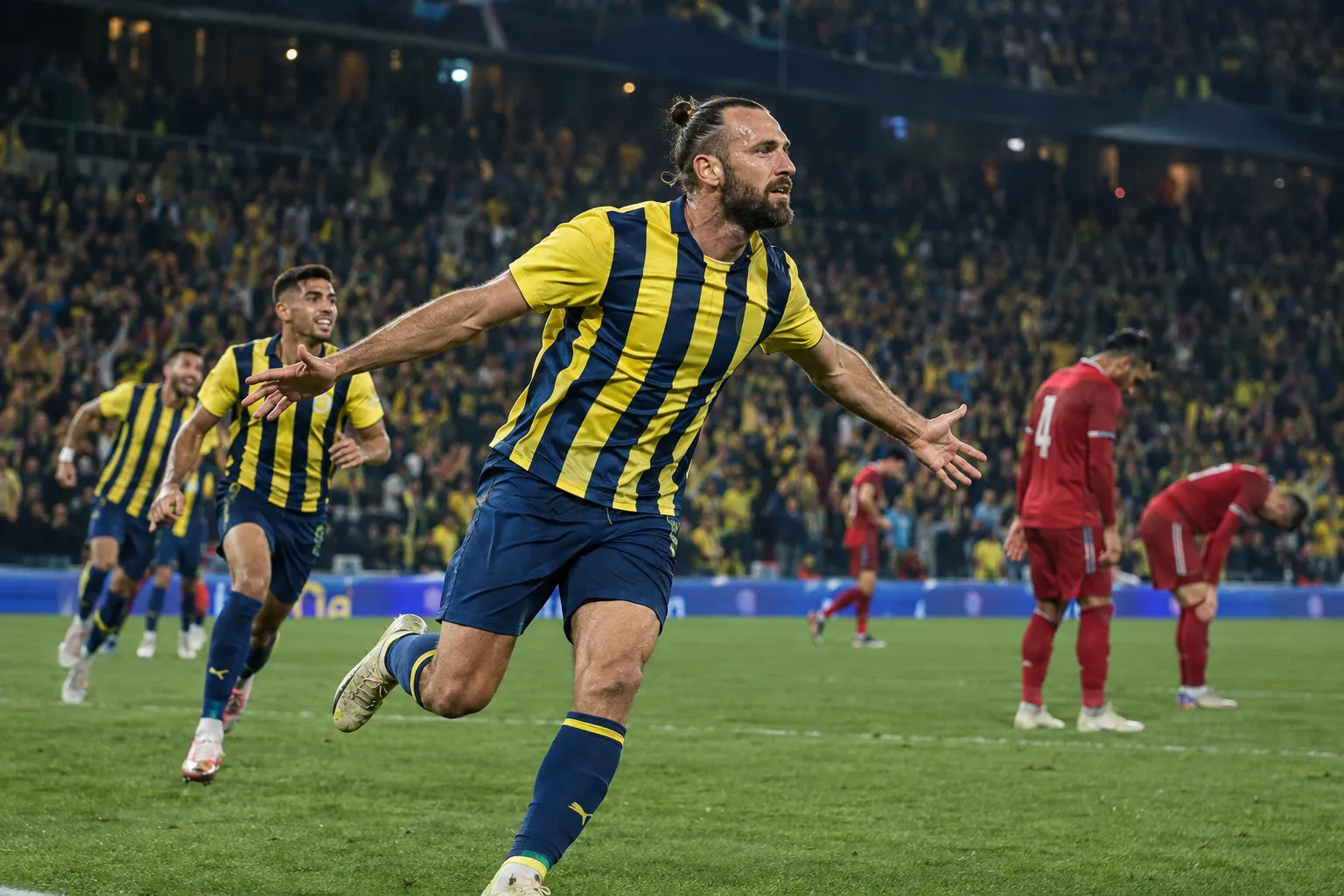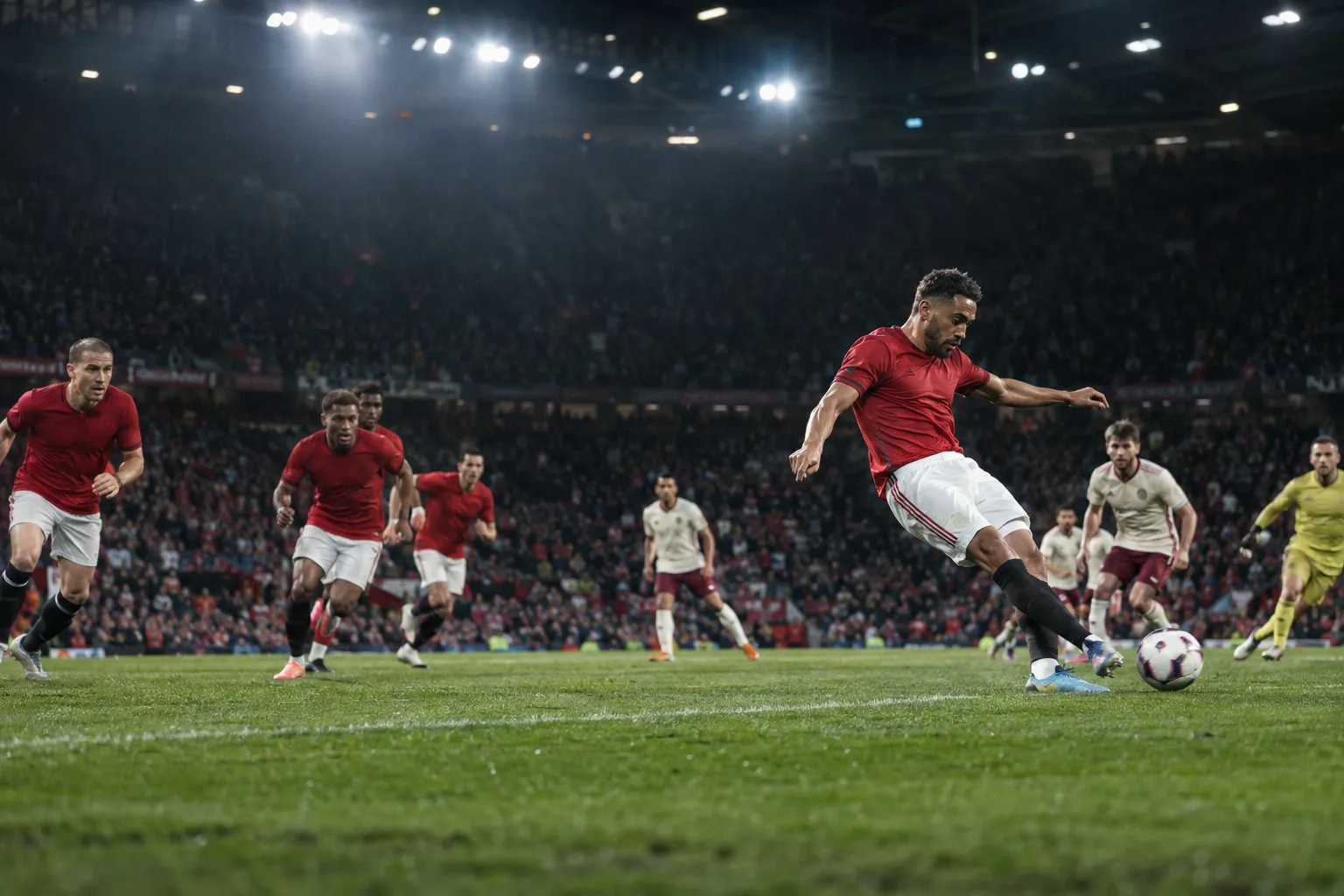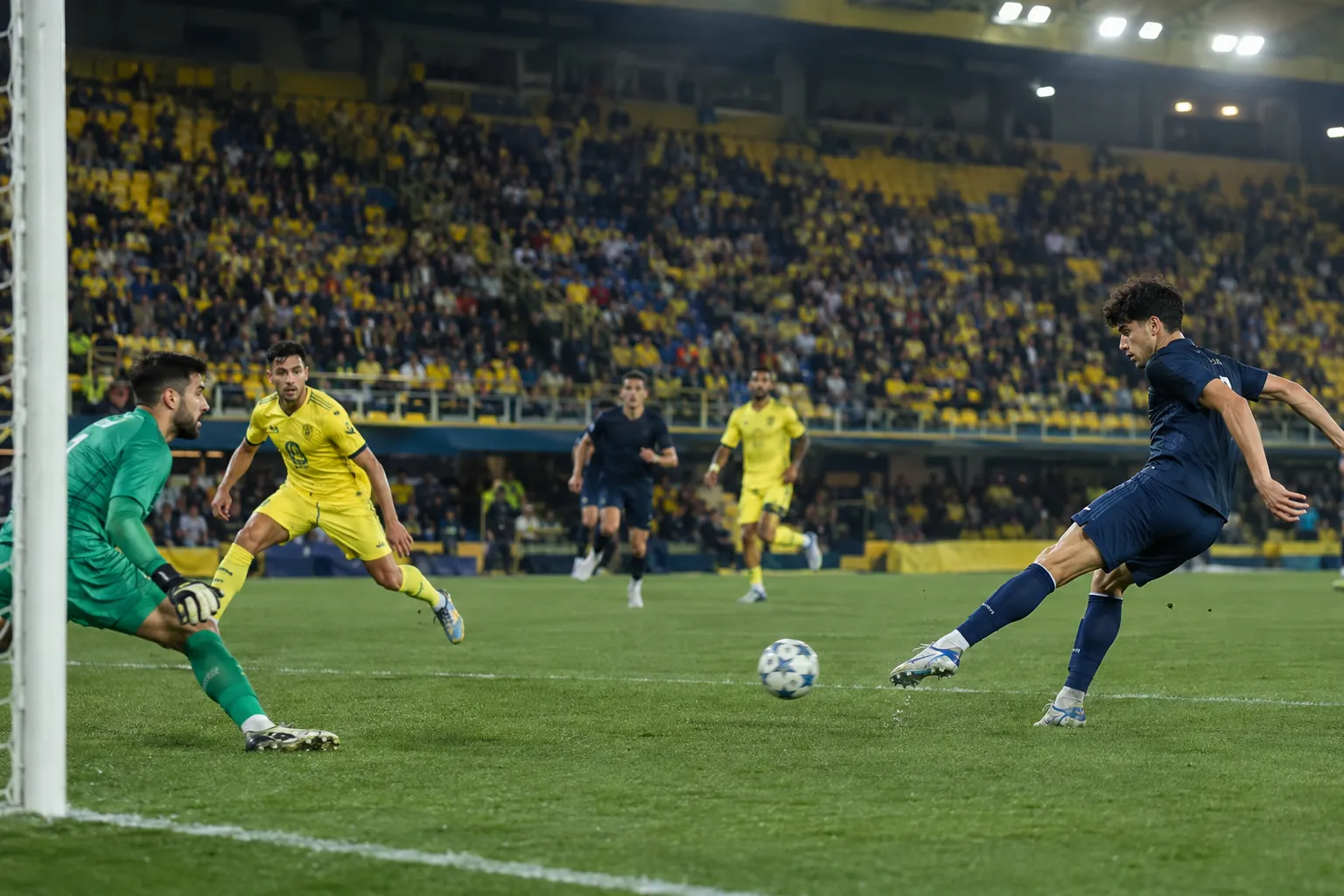
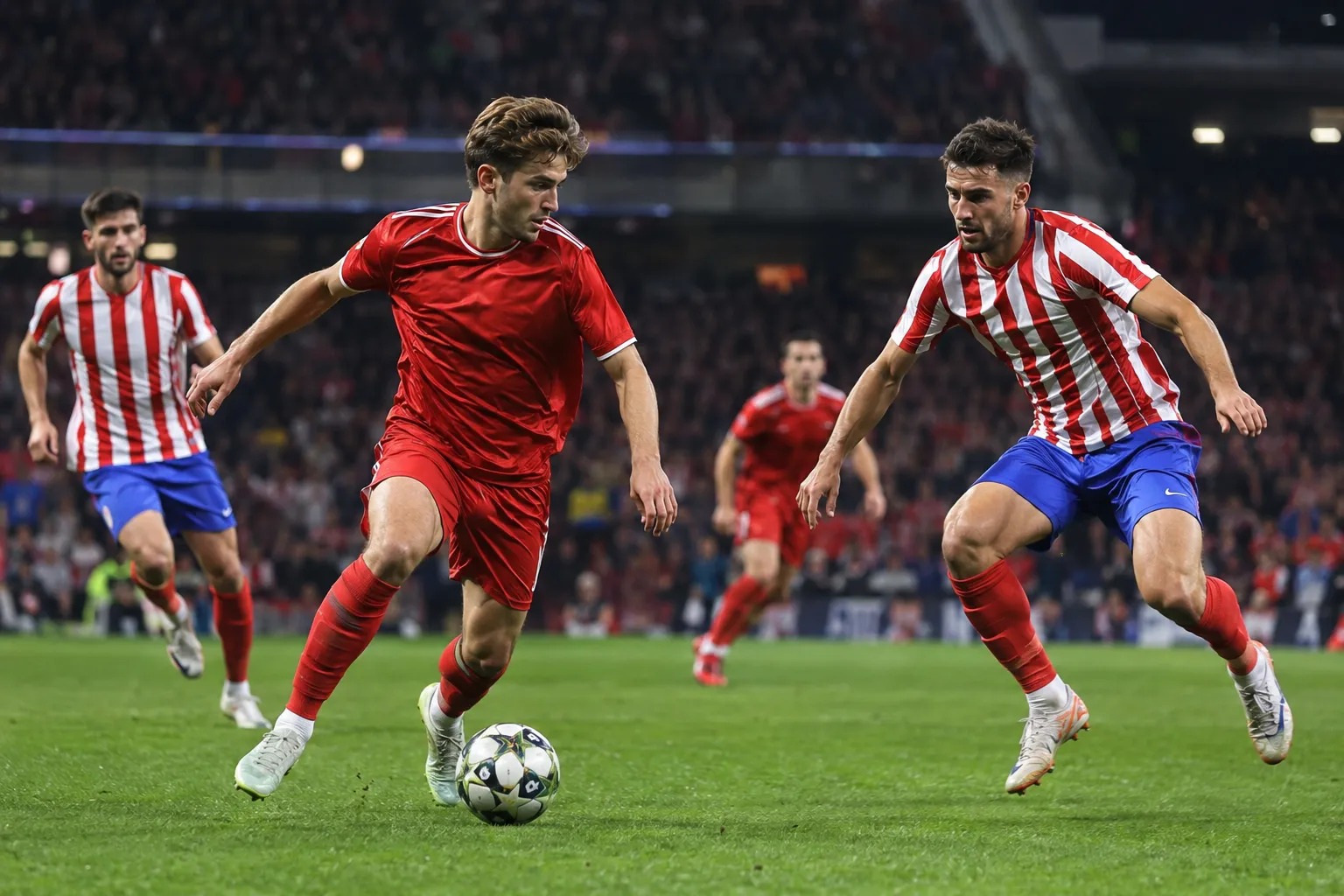
Bayern Munich beat Atlético Madrid 2-0 on Tuesday 3 November in the fourth round of the Champions League league phase. Lennart Karl opened the scoring in the 54th minute, before Konrad Laimer doubled the lead in the 74th. The analysis published by UEFA on 4 November highlights a common factor behind both goals: Bayern’s ball recoveries in advanced areas. It was an important win, achieved with a depleted squad, but not enough to predict how the rest of a still lengthy league phase will unfold.
A patient first half, without rushing
Atlético had the clearest chance in the opening minutes: Julián Álvarez shot narrowly wide. Bayern then gradually established possession and pushed the Madrid side back, without immediately finding a way through. The Guardian’s match report describes a home side that kept the visitors at bay for a long time, but struggled to play out and supply Alexander Sørloth. The score was still goalless at half-time.
That patience matters when assessing the match. Bayern did not turn their territorial dominance into a goal in their first spells of pressure; they maintained their shape and continued to push Atlético towards their own penalty area. The official Bundesliga report notes several Bayern efforts before the break, notably from Harry Kane and Josip Stanišić. Defending deep delayed the opening goal for Atlético, but did not provide enough regular opportunities to play out and ease the pressure.
Two goals from pressing after losing the ball
In the 54th minute, a scrappy sequence in the Madrid side’s penalty area worked in Bayern’s favour. After an effort was blocked, Robin Le Normand failed to clear cleanly; Karl pounced, won the ball and chipped his shot over Jan Oblak. Ten minutes later, Atlético tried to respond with a triple substitution, but Bayern continued to capitalise on their opponents’ losses of possession. For the second goal, Alphonso Davies won the ball before Kane found Laimer, who hit a powerful shot.
The UEFA Technical Observer Group’s analysis, published on 4 November, confirms that both goals followed high turnovers. It also records 58 ball recoveries for Bayern and 30 tackles, the highest total of the evening. These figures support a tactical reading of the match: pressing did more than disrupt Atlético’s build-up; it shortened the route to goal. The second goal punished another loss of possession just as the Madrid side needed to take greater risks.
Karl and Laimer, expressions of a collective performance
The goalscorers embodied two facets of the win. At 18, Karl was rewarded for his opportunism in the penalty area; according to UEFA, he became the fourth-youngest player to reach five Champions League goals, behind Lamine Yamal, Kylian Mbappé and Raúl. Laimer, meanwhile, combined defensive work with forward runs: he finished the second goal after contributing to the ball recovery and transition. UEFA named him Player of the Match.
However, it would be reductive to attribute the result solely to the finishers. Bayern remained compact enough to limit counter-attacks and continued to attack after taking the lead. The Guardian reports 19 Bayern shots to Atlético’s nine, while UEFA highlights the frequency of high recoveries. These figures do not tell the whole story of the quality of the chances, but they support the impression of a team that controlled the key spells more effectively. Manuel Neuer still had to make saves, notably from an effort by Marcos Llorente: control did not mean there was no danger at all.
A strong signal despite absences, but no premature verdict
The circumstances make this win more significant for Bayern. The club were without several players, including Serge Gnabry and Jamal Musiala, and Vincent Kompany was not on the touchline; Aaron Danks took charge of the team, according to the Bundesliga report. The match therefore offers an encouraging sign of the squad’s depth and cohesion, without proving that the replacements can maintain this level throughout the season.
For Atlético, the defeat ended their unbeaten home run this season, according to the same report. Above all, it exposed a specific difficulty: when Bayern prevented them from playing out from the back and won the duels, the Colchoneros struggled to get the ball to their forwards. This is not enough to invalidate their usual organisation, but it gives Diego Simeone a concrete area to work on ahead of the next European fixtures.
An important win, not qualification secured
Bayern recorded their first away win against Atlético, according to UEFA, and moved on to eight points after four rounds. The German club have put themselves in a favourable position, but the league phase runs until January: this result alone guarantees nothing. Bayern’s next European fixture is scheduled for 25 November away to Lille, according to the Champions League fixture list.
The most useful lesson from Madrid, then, goes beyond the scoreline: Bayern turned patient possession into chances through their immediate reaction to losing the ball. Atlético’s response will not necessarily be to abandon their compact block, but to find more reliable ways out when opponents press high. That detail, more than the superiority shown on the scoreboard alone, will make this a reference point for both teams.
Go to the source.
The references below document the research and let readers consult the original publications. Their number alone does not certify every statement in this article.
- bundesliga.comcompte rendu de la Bundesliga ↗Reference consulted · accessed on 04/11/2026
- The Guardiancompte rendu du Guardian ↗Reference consulted · accessed on 04/11/2026
- UEFAanalyse de l’unité technique de l’UEFA, publiée le 4 novembre ↗Reference consulted · accessed on 04/11/2026
- UEFALigue des champions ↗Reference consulted · accessed on 04/11/2026