
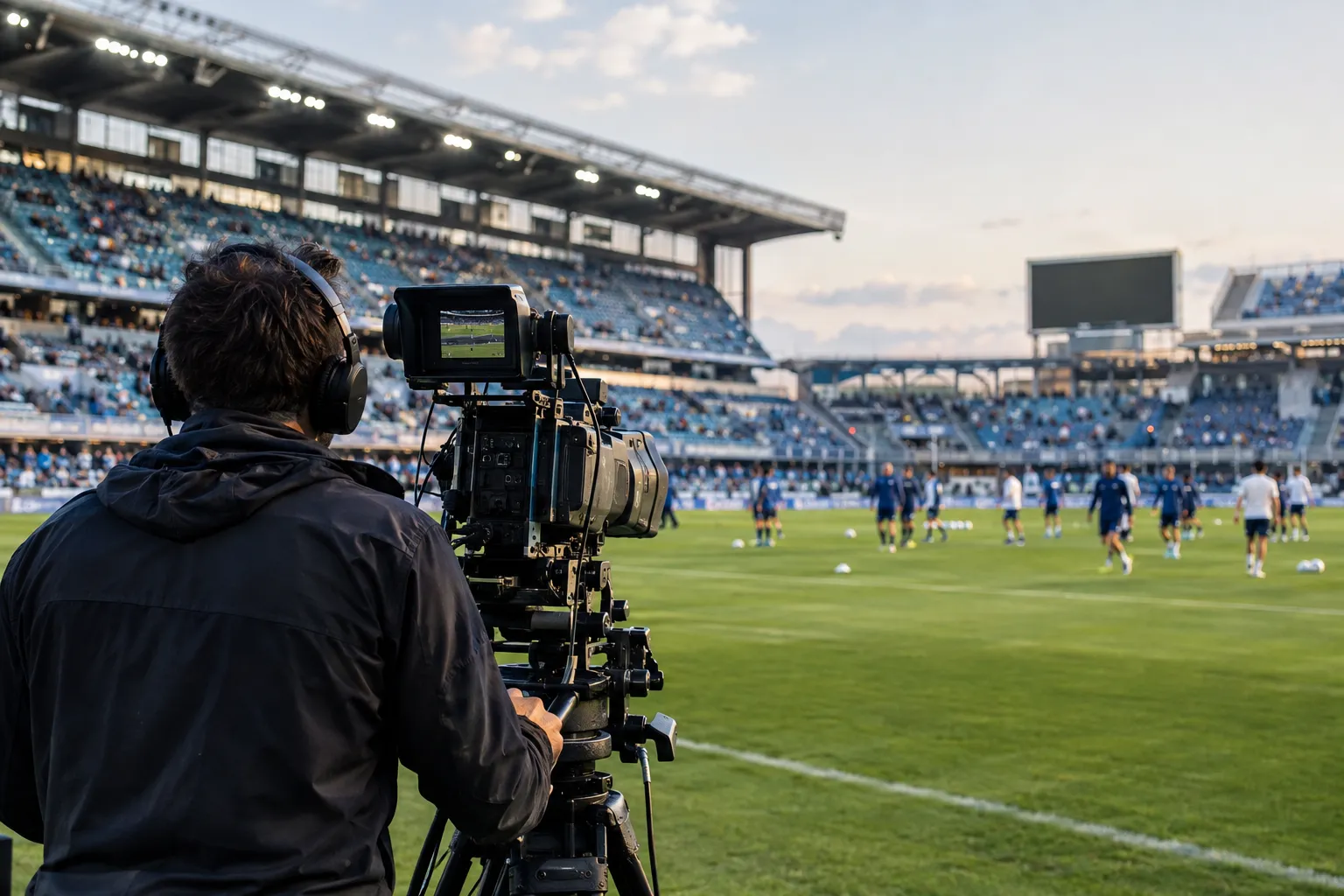
The new development is specific, but more limited than the suggestion that a deal has already been finalised: according to an investigation published by The Guardian on 2 November, DAZN has secured an exclusive option on the global streaming rights to the 2029 men’s Club World Cup. The value of the option and the date on which it might be activated are not known. FIFA, meanwhile, has yet to clarify the format, the number of participants or the host country. The announcement therefore secures an important commercial avenue without resolving the sporting and political questions surrounding the tournament.
An option, not a definitive award of rights
The distinction between an option and a firm contract is essential. The Guardian reports that DAZN has an exclusive opportunity concerning the global streaming rights for 2029, but notes that neither the amount nor the activation schedule is public. It would therefore be premature to claim that the platform will necessarily show every match, in every territory and under the same terms as in 2025. The precise scope of any television rights or sub-licensing agreements has not been established either.
FIFA had already included the 2029 edition in its media rights tender, launched in 2024 in Europe and sub-Saharan Africa, among other regions, as its official announcement recalls. This earlier step provides context for the new information, but does not constitute official confirmation of the terms of the option announced today. As of 2 November 2026, The Guardian is the recent source detailing the agreement; FIFA has not issued a statement publicly confirming its terms in the material consulted. This limitation must remain clear.
The 2025 precedent looms over negotiations
DAZN acquired the global rights to the 2025 edition for a reported one billion dollars. The inaugural 32-team tournament, held in the United States, thus served as a major precedent for the competition’s distribution. According to The Guardian, the platform committed after other broadcasters withdrew and discussions with Apple over the valuation of the rights broke down. FIFA then announced that all 63 matches would be shown free on DAZN; its December 2024 announcement relates specifically to 2025, however.
That free access should not be extrapolated to 2029. The announced option does not, by itself, determine the price paid, the access model for viewers, availability in each market or the role of partner broadcasters. The sub-licensing agreements reached for 2025 show that holding global rights can coexist with broadcasts on other networks, but they do not prejudge the terms of the next edition. For supporters, the immediate point is not where to watch a match, but that a central player could once again shape distribution.
A strategy that forms part of a wider partnership
This option extends an already strengthened relationship between FIFA and DAZN. In October 2025, the two organisations announced the launch of FIFA+ on the platform, with the aim of bringing together live matches, archives and editorial content. FIFA’s announcement on FIFA+ describes the project as a global offering combining men’s and women’s football, with both a free tier and premium content.
The rationale is clear: FIFA is seeking international digital distribution, while DAZN is looking to strengthen its rights portfolio and relationship with the governing body. The Guardian notes, however, that DAZN remains loss-making and reports an increase in its operating losses in its 2025 accounts. This financial context is a reason not to reduce the agreement to a simple sign of commercial strength: the platform’s ability to make its investments profitable, and FIFA’s ability to turn audiences into sustainable revenue, remain key issues. The financial figures cited here come from The Guardian’s investigation; on their own, they do not allow conclusions about the operation’s future viability.
The tournament remains a sporting and political work in progress
The distribution of the pictures is only one of the issues facing 2029. The Guardian says no decision has yet been made on the number of teams, the format or the venues. An expansion to 48 clubs is under discussion, but should not be presented as settled. In June, the same outlet reported an agreement in principle between FIFA and European Football Clubs to create a joint venture linked to the competition’s commercial exploitation, and said an expanded field was likely. Its June article also documented tensions over solidarity payments owed to clubs that did not take part.
The issue therefore combines organisation, governance and redistribution. According to information from The Guardian, the European clubs’ association has expressed dissatisfaction over delays to payments linked to the 2025 edition, while the details of the commercial joint venture have not been finalised. A broadcast option can give FIFA a revenue prospect and an identified partner; it does not resolve these disputes or the question of how much say clubs will have in the tournament’s governance.
Morocco mentioned, but no host appointed
The choice of host country also remains open. The Guardian mentions Morocco as a possible candidate and refers to the possibility of co-hosting with Spain; these are reported scenarios, not a FIFA decision. The fact that the two countries are co-hosting the 2030 World Cup may fuel speculation, but does not amount to an award. The same article presents political considerations surrounding the FIFA presidency and the governing body’s relations with its partners as factors that could affect the timetable.
For now, the useful information comes down to three points: DAZN has an exclusive option on global men’s streaming rights for 2029; its financial and operational terms are not public; and the very shape of the competition remains to be determined. The next confirmations will need to come from FIFA on the activation of the rights and the tournament, followed by organisers on the arrangements for broadcasting in each territory. Until then, it is better to speak of a contractual advantage for DAZN than of coverage that is definitively guaranteed.
Go to the source.
The references below document the research and let readers consult the original publications. Their number alone does not certify every statement in this article.
- inside.fifa.comcommuniqué officiel ↗Reference consulted · accessed on 02/11/2026
- inside.fifa.comcommuniqué de décembre 2024 ↗Reference consulted · accessed on 02/11/2026
- inside.fifa.comcommuniqué de la FIFA sur FIFA+ ↗Reference consulted · accessed on 02/11/2026
- The Guardianenquête publiée le 2 novembre par le Guardian ↗Reference consulted · accessed on 02/11/2026
- The Guardianarticle de juin ↗Reference consulted · accessed on 02/11/2026