
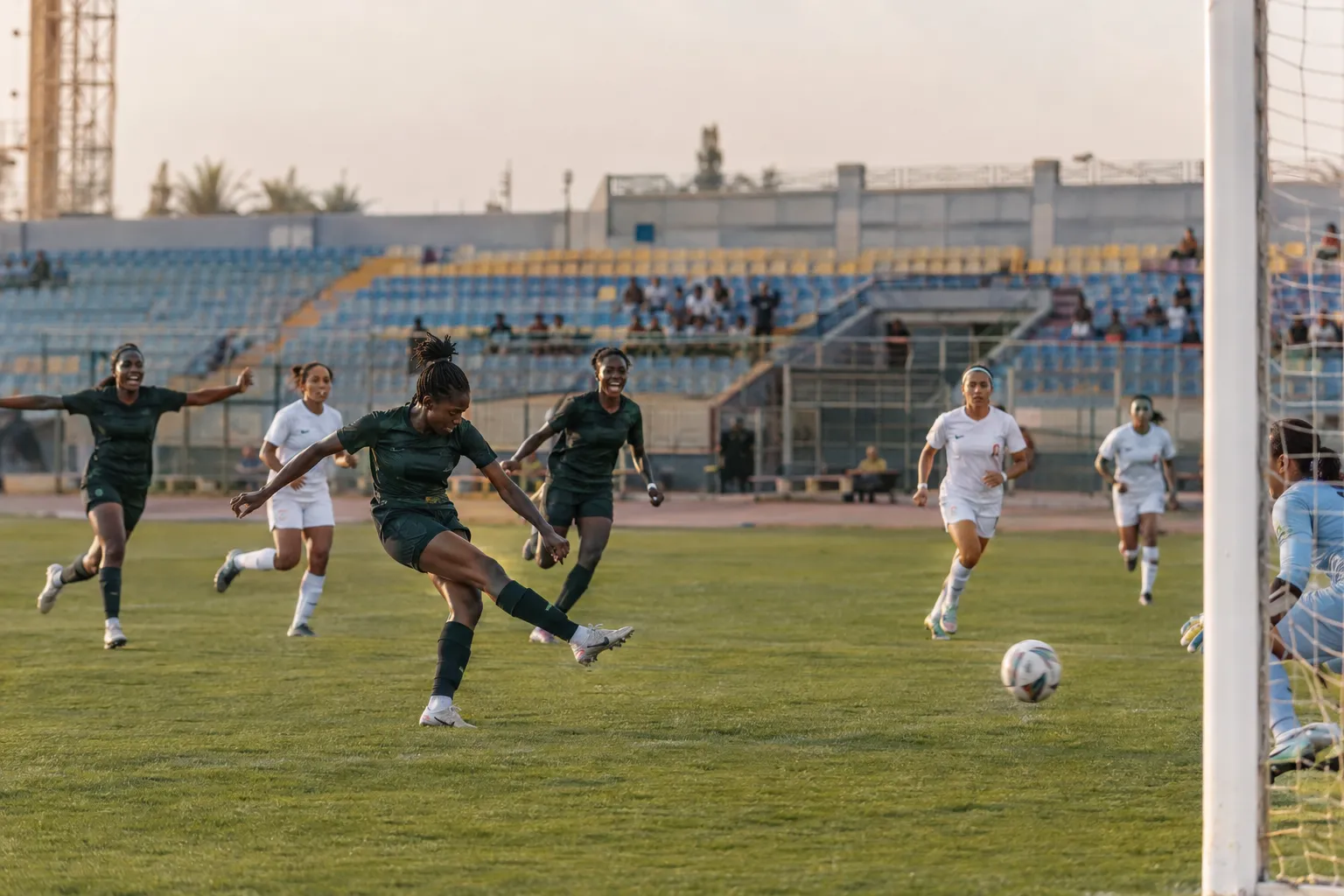
On 2 November 2026, in Ismailia, Kawempe Muslim Ladies beat AS FAR 3-2 on the opening matchday of Group B in the CAF Women’s Champions League. After falling behind to Fatima Tagnaout’s opener, the Ugandans came from behind against the defending champions before Agnes Nabukenya scored the winner in stoppage time. For a club making its first appearance in the final tournament, this was a major achievement. But it is only a first step: two group matches remain, and the competition cannot be reduced to this opening victory.
A first match already steeped in history
The fixture brought together two very different journeys. AS FAR were playing in their sixth consecutive final tournament and arrived as two-time African champions, while Kawempe were competing in the tournament for the first time, as Uganda’s first representative at this level. CAF presented the match as the start of the Moroccan side’s title defence and the Ugandans’ continental debut (CAF preview).
The result is therefore notable beyond the three points: it shows that a debutant club can compete with a side accustomed to continental competition. However, it should not be treated as a definitive verdict on the balance of the group or the hierarchy of African football. One match is not enough to measure Kawempe’s consistency, nor to reduce AS FAR’s experience to this defeat.
The game turned around after the break
AS FAR struck first. According to the match report published that day by Africa Top Sports, Tagnaout opened the scoring in the 6th minute. Kawempe equalised through Nabukenya in the 53rd minute, then took the lead five minutes later thanks to Shakira Nyinagahirwa. Doha El Madani brought the teams level again from the penalty spot in the 69th minute. Nabukenya eventually scored the decisive goal in stoppage time to complete her brace.
The clearest reading of this sequence is that Kawempe did not fold after going behind, and then found a response when AS FAR restored parity. The match’s timeline gives particular weight to the closing stages: Kawempe found one final answer after the Moroccan side’s equaliser, rather than settling for a draw that would already have been valuable for a debutant.
However, the information available here includes neither complete shooting data nor a detailed tactical report that would explain precisely what adjustments were made after the break. It would therefore be unwise to claim that the comeback was due to a change of system or sustained territorial dominance. The verifiable facts are the score, the goalscorers and the reported chronology.
Nabukenya, from qualification to the decisive goal
Agnes Nabukenya’s performance builds on progress already evident before the final tournament. CAF notes that she scored the winner in the CECAFA zone qualifying final in August, securing Kawempe’s place in Egypt. Her brace against AS FAR continues that story, but one significant match should not be turned into a definitive judgement on her potential or career.
The collective achievement is also significant. Qualification came through a successful regional campaign, and Kawempe arrived in Ismailia with a player who had already made the difference at both stages. This link between qualifying success and a first continental performance gives the result a sense of continuity: it was not just an isolated surprise, but a team that turned its place in the tournament into an immediate result against the group’s most experienced opponent.
The group remains wide open
The win does not settle the race for the semi-finals. CAF states that the top two teams in each group qualify for the last four. In Group B, Kawempe still have to face USFAS Bamako and Ampem Darkoa, while AS FAR will also need to respond in their two remaining matches. The official schedule lists Kawempe’s next matches on 5 and 8 November, followed by the semi-finals on 11 November (competition schedule).
The victory gives the Ugandans a valuable sporting advantage, but it is not yet enough to predict their qualification. The head-to-head meetings between the four teams, recovery management and the ability to reproduce this intensity will matter more than the prestige of the opening result. For AS FAR, the defeat makes what lies ahead more pressing, but does not make their campaign irretrievable.
What this result changes — and what it does not
For Kawempe, the gain is immediate: the team have beaten the defending champions and shown they can stay in the match after going behind and then being pegged back. For Ugandan women’s football, this opening fixture provides tangible continental exposure. But it would be premature to see it as proof of a lasting shift in the balance of power, or to call Kawempe title favourites.
The next indicator will be whether the club can follow this up against their other group opponents. Whatever happens, the performance on 2 November will remain a remarkable start; its ultimate significance will depend on what Kawempe build from here. The most useful lesson is therefore a measured one: AS FAR are not untouchable, and Kawempe have earned the right to be taken seriously — without the road to the last four having already been mapped out.
Go to the source.
The references below document the research and let readers consult the original publications. Their number alone does not certify every statement in this article.
- cafonline.comprésentation de la CAF ↗Reference consulted · accessed on 02/11/2026
- cafonline.comCAF rappelle ↗Reference consulted · accessed on 02/11/2026
- cafonline.comprogramme de la compétition ↗Reference consulted · accessed on 02/11/2026
- en.africatopsports.comAfrica Top Sports ↗Reference consulted · accessed on 02/11/2026